

How To Clean Dirty Veggies And Fruits
Eat Organic
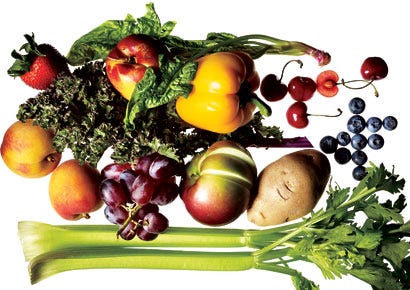
Scan whatever supermarket produce section and what do you run across? Rows of brightly hued, blemish-costless fruits and vegetables. They're gorgeous. Merely plants, like people, have natural imperfections—and some require more help than others to look skilful, not to mention maintain their youthful looks as they age.
Get a printable copy of our Organic Fruits and Veggies Shopping Guide.
In the plant world, the equivalent of beauty products are the dozens of chemicals that farmers use to fend off insects, pests, weeds, fungal attacks, and rot. Not surprisingly, plants that are more vulnerable to attack need more of them. To help you tell which is which (and, therefore, which are best to consume organic, as opposed to those you can buy conventionally to salvage coin), the Ecology Working Grouping publishes ii lists—the Dingy Dozen and the Clean 15. The EWG rankings are based on USDA-tested levels of chemical residues that remain on conventionally raised fruits and vegetables after washing. Revised lists came out in leap 2010, with a couple of surprising new additions.
Read on to observe the 12 fruits and veggies all-time bought organic—and 15 that are safety to swallow conventionally grown.

eight minutes in the morning to a apartment belly. Pick up your copy today!
Buy Organic: Celery
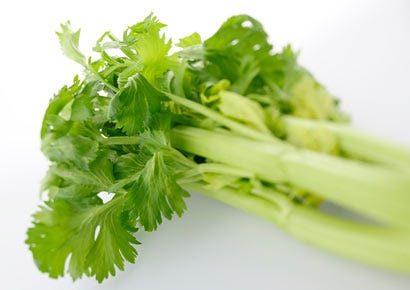
Why it's dirty: Due to peak consumer need around Thanksgiving and Christmas, 75% of the crop is grown during the autumn and winter, when pelting and current of air promote the growth of bacteria and fungal diseases. And because we eat the entire stem, it must be sprayed repeatedly to ward off pests. "Nobody likes to find a caterpillar-damaged stalk in their celery bunch," says Stuart Reitz, PhD, a inquiry entomologist with the USDA.
Buy Organic: Peaches
Why they're dirty: Sweetness and succulent, peaches tin exist merely every bit alluring to insects as to people. Farmers may spray peaches every week or two from flower to harvest—and peach fuzz can trap pesticides, says peach breeder John R. Clark, PhD, a horticulturalist at the University of Arkansas, who peels every one of the thousands of peaches he eats each year.
Buy Organic: Strawberries
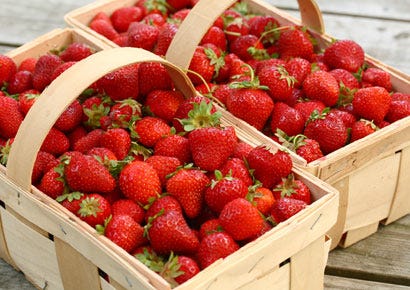
Why they're dirty: Strawberries are not only sugariness and juicy merely too delicate and prone to illness, including fungal attacks that tin turn them to mush during transit and storage. "With apples and peaches, a lot of spraying is cosmetic to get blemish-free fruits," says Richard Wiles, senior vice president for policy at EWG. "With berries, you're just trying to become them beyond the finish line into the shop before they go bad."
Purchase Organic: Apples
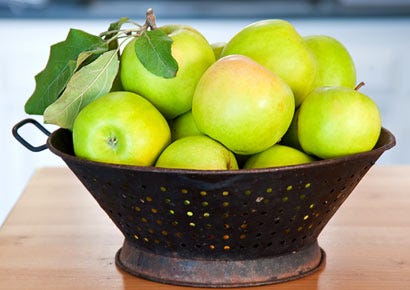
Why they're muddied: Sweet-smelling and delicious, apples are susceptible to more than 30 insects and at least 10 diseases. And fungicides and other chemicals are added later on picking to prevent tiny blemishes that can accumulate during storage of up to 9 months.
Buy Organic: Blueberries
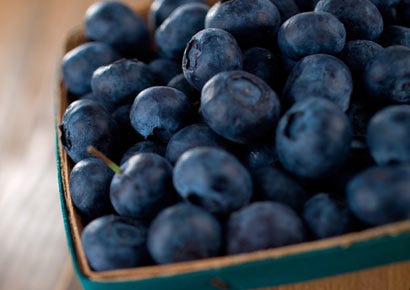
Why they're muddied: Blueberries are new on the Dingy Dozen listing—possibly because the USDA began testing them only three years ago, later large increases in production. The berries are targets for insects such as blueberry maggots and bagworms.
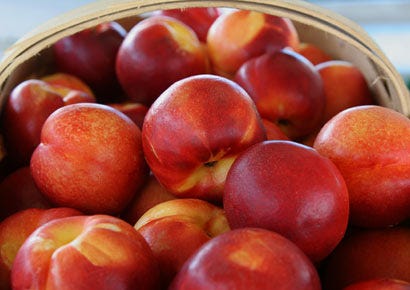
Buy Organic: Nectarines
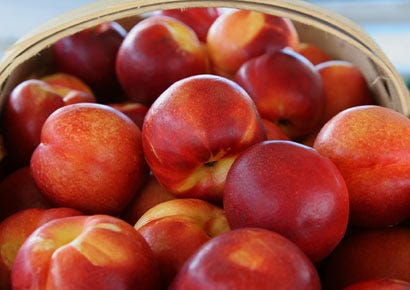
Why they're dingy: Nectarines differ from peaches only in the absenteeism of fuzz—a trait that probable arose as a natural mutation of a peach tree—so it's no wonder they're susceptible to many of the same pests, including oriental fruit moths and peach twig borers. Thanks to their waxy skin, they don't retain as many pesticides as peaches. On the other hand, they are more vulnerable to rot and scarring.
Buy Organic: Bell Peppers
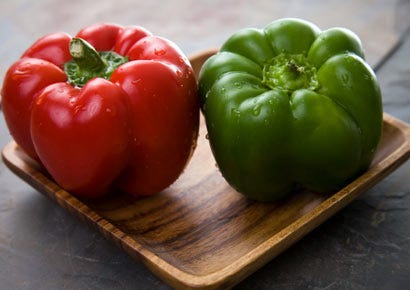
Why they're dirty: Unlike cruciferous vegetables such as broccoli, sweet bell peppers (which are technically fruits) have no bitter compounds to serve as built-in insect repellents. They fifty-fifty lack the peppery taste of their cousins, the chile peppers. And the creases at their crowns may provide nooks for pesticides to accumulate, says Philip Stansly, PhD, an entomologist at the Academy of Florida.
Buy Organic: Spinach
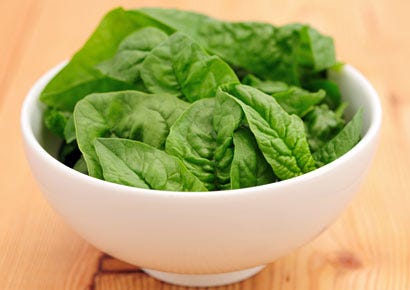
Why it's dirty: Spinach is a mere leaf that'due south crunched by a variety of insects, including grasshoppers. In add-on, says Wiles, "spinach tends to pull persistent DDT residues out of the soil and into the foliage." These chemicals remain in the earth decades after they were banned.
Buy Organic: Kale
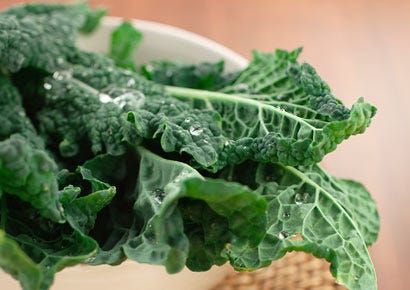
Why it's dirty: The outer leaves are not removed before sale, so any amount of damage will brand it unmarketable. Even natural enemies of the pests that feed on kale can exist considered contaminants in harvested produce, so farmers spray for all bugs, including the "good" ones.
Buy Organic: Cherries
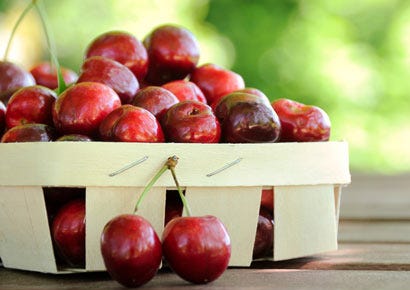
Why they're dirty: Considering cherries are a naked fruit—without pare or protection—they're vulnerable to pests such as the western cherry-red fruit fly. If simply 1 of its maggots is found in a shipment, the entire load of fruit must be dumped, according to quarantine regulations, so growers spray out of fear of losing their crops.
Buy Organic: Potatoes
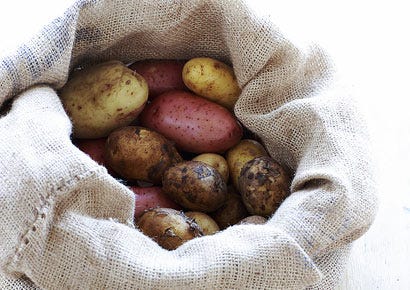
Why they're dingy: New to the list, America's number one vegetable is sprayed 5 or more times throughout the growing flavour to protect confronting various pests—and to ensure a crop of compatible shape and size for fast-nutrient outlets and white potato chip producers. After harvesting, some other circular of spraying occurs in the packing shed to ward off molds and sprouting.
Buy Organic: Imported Grapes
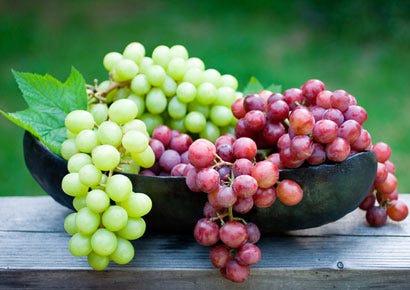
Why they're muddy: During their long transit from the southern hemisphere, imported grapes are susceptible to Botrytis cinerea rot, which causes the fruits to dissever and leak. To prevent that, farmers spray aggressively with fungicides. (Domestic tabular array grapes exercise not need the same spraying considering most are grown in the dry out desert climate of Southern California, where botrytis does not thrive.)
Purchase Conventional: Onions
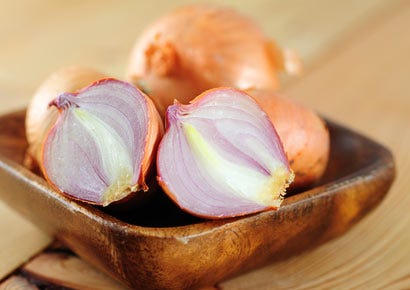
Why they're clean: Onions manufacture their own protective chemicals, a series of unpleasant-tasting sulfur compounds that discourage insect munching. Though farmers may spray early in the growing season, residues are removed when the dry outer layer of the bulb is shed during harvest.
Buy Conventional: Avocado
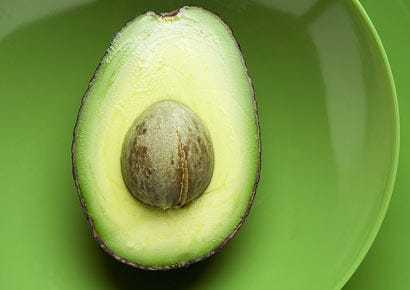
Why it'south clean: Most of the pesticides that are used to treat avocados accumulate on the skin.
Buy Conventional: Sweetness Corn
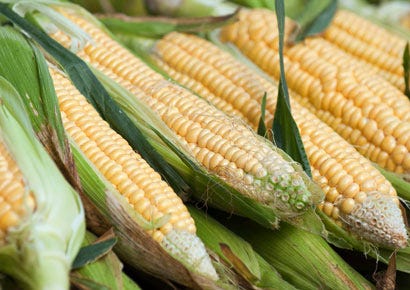
Why it'south clean: Corn is husked before eating, eliminating residues on the outside.
Buy Conventional: Pineapple
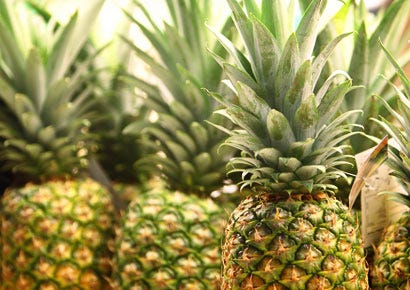
Why it's clean: Most spraying is done early on in the growing season, so minimal residues remain later harvest. Those that do are removed with the thick rind.
Buy Conventional: Mangoes
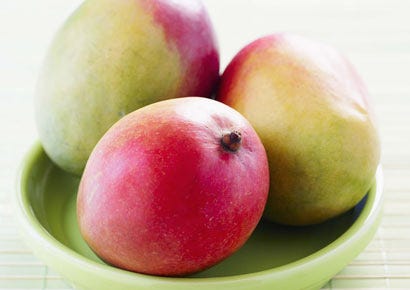
Why they're clean: Mangoes are grown in Mexico, the Caribbean, and Southward America, where the dry out climate discourages fungus and hand weeding is a mutual alternative to herbicides. In addition—repeat subsequently the states—mangoes are peeled before eating.
Buy Conventional: Sweet Peas

Why they're make clean: They are protected by their pods.
Buy Conventional: Asparagus
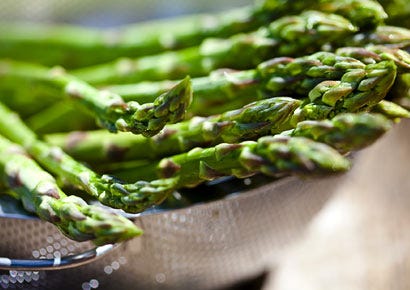
Why it'due south clean: The spears leap up so fast, there'southward niggling fourth dimension for insects to attack.
Purchase Conventional: Kiwifruit
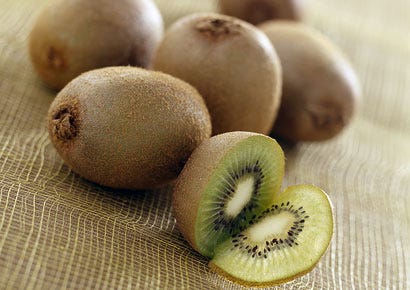
Why it's clean: Lacewings and parasitic wasps help control the pests that like to feed on kiwis.
Purchase Conventional: Cabbage
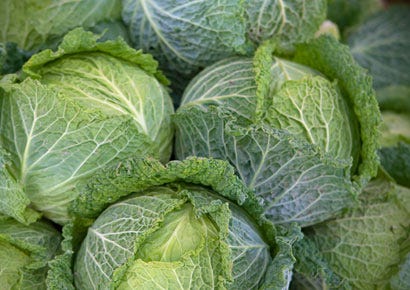
Why information technology's clean: The plant is sprayed, simply the outer leaves that absorb pesticides are discarded earlier auction.
Healthy Cabbage Recipes
Buy Conventional: Eggplant
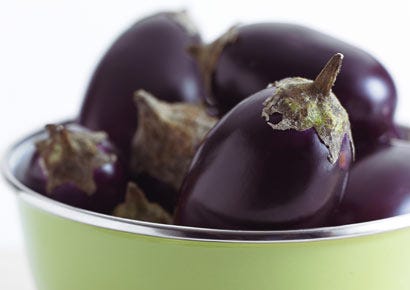
Why it'southward clean: The eggplant has a slick surface that sheds chemicals easily.
Buy Conventional: Cantaloupe
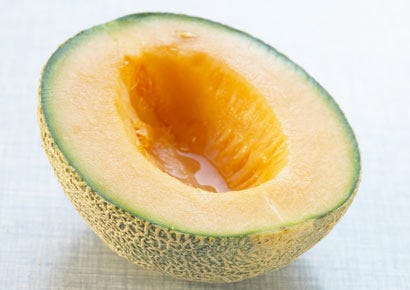
Why it's clean: Though the melons are sprayed with insecticides, we don't ingest them because the fruit is cut out of the thick rind before, well, you know.
Buy Conventional: Watermelon
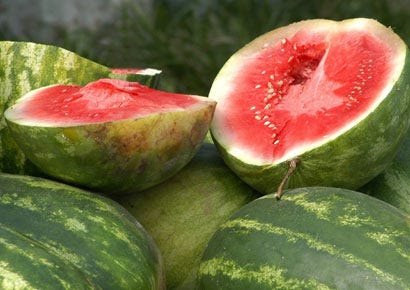
Why information technology's clean: The fruit has a thick protective rind that is non eaten.
Purchase Conventional: Grapefruit
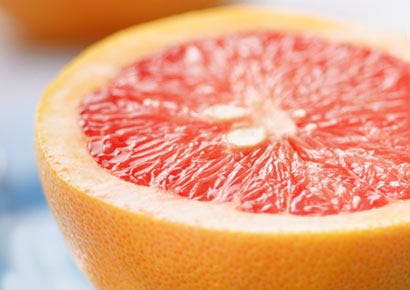
Why it's clean: Although farmers often use fungicides to control greenish mold, most of the residues remain on the peel.
Purchase Conventional: Sweet Irish potato
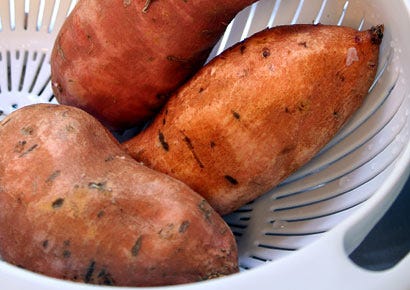
Why information technology'south clean: The sweet potato has built-in defenses. If bitten, it oozes a milky-white sap that gums up insect mouthparts. Before they're sold, sugariness potatoes are cured at warm temperatures and high humidity. This causes the skin to thicken, providing protection confronting damage and disease.
Buy Conventional: Honeydew Melon
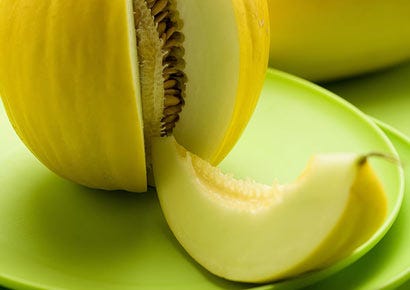
Why it's make clean: Honeydew may exist washed in diluted chlorine during packing in gild to ward off rot-inducing microbes. But—need we say information technology over again?—yous discard the rind earlier eating. Run into, y'all're an expert already.
Just remember that whether you opt for conventional or organic, you're better off eating more fruits and vegetables rather than less. And whatever produce you lot buy, wash or peel it earlier eating.
More than Tips for Healthier Eating
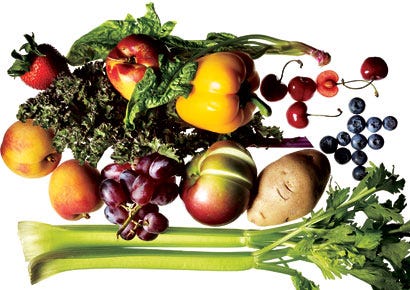
Dirtiest and Cleanest Fruits and Veggies ListNever forget the best and worst again! Get our printable list for your next shopping trip
- Power Up Produce
Get the near nutrients from your fruits and veggies with these eating and cooking tips
Find out what'due south worth the cost, what's not, and other ways to save
This content is created and maintained by a third political party, and imported onto this page to help users provide their email addresses. Yous may be able to find more information nearly this and similar content at piano.io

Source: https://www.prevention.com/food-nutrition/healthy-eating/a20479297/fruits-and-veggies-to-buy-organic/
Posted by: mcdermottacque1994.blogspot.com
0 Response to "How To Clean Dirty Veggies And Fruits"
Post a Comment